a practical, modular hydroponic planter, completely 3D printed. all it takes is a little ingenuity.
Published: September 22, 2025
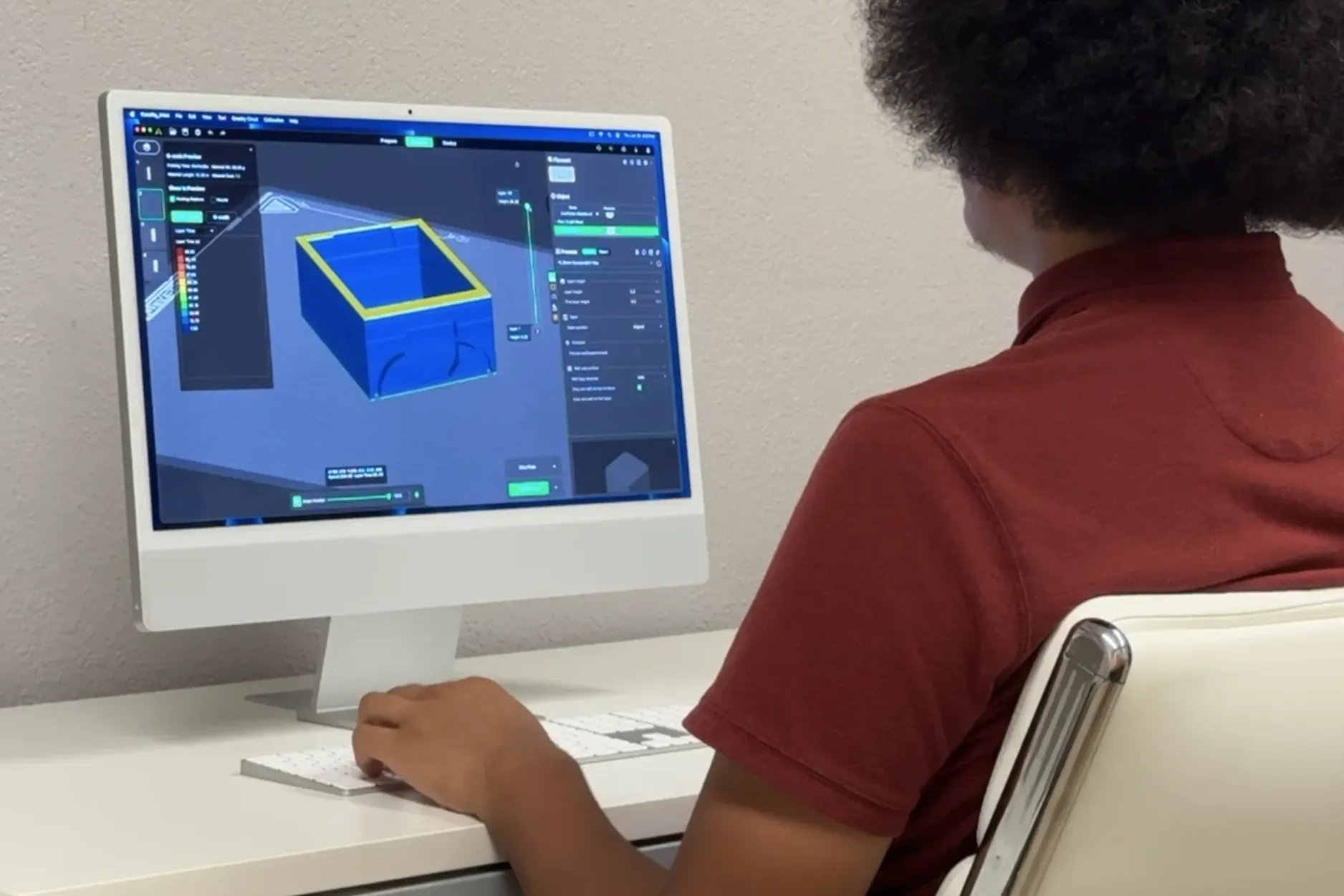
Nathan Bosket 3D Modeling a prototype 3D printed hydroponic planter.
VIDEO: Watch as Nathan Bosket creates and assembles a fully 3D printed modular hydroponic planter.
3D printing is a technology that can be used to accelerate innovations within multiple fields of work. The concept of creating parts, tools, and whole mechanisms on-demand has allowed workplace environments to incorporate the internal production of many useful items. Companies and organizations are integrating 3D modelers and designers into the business workflow to do a variety of jobs ranging from building sophisticated prototypes to making simple toys. In the video above, Growing Gears CEO, Nathan Bosket, demonstrates how he utilized a 3D printer at the North Las Vegas Urban Center of Advanced Agricultural Technologies to build a low cost, modular hydroponic unit for people to use in their homes. Projects like this provide a new perspective on home gardening and expand interest into the advancements of modern agriculture.
Understanding how a 3D printer works is just as important as knowing how to use it. Being able to identify the main components of the machine along with their functions is essential to its proper operation and is required in order to identify and correct malfunctions that are causing print defects. Repairing 3D printer components often appear as a daunting and complicated process, but a trained eye can usually spot the root causes of 3D printing errors, which are commonly simple to fix.
Creativity, imagination, and inquisitive engineering are essential in the arena of 3D printing. Hydroponics in the simplest form equates to water being delivered to plant roots without the use of soil, something that can be accomplished with basic 3D printed parts. To make the process advanced, you can integrate various technologies such as LED indoor growing lights, water aeration pumps, and automatic system controllers. This better facilitates the growth of the plants and ensures optimum conditions for healthier results.
Growing Gears demonstrating 3D printing and hydroponics at the University of Nevada Reno, Extension.
The agricultural workforce of the future must be exposed to advanced and innovative hydroponic farming methods as well as the various technologies that can be integrated to support high-tech farmers, such as 3D printing. In the U.S. only a few hundred thousand people produce food, which means less than a tenth of one percent of the American population engages in our farming system. This number will likely get smaller as more and more people choose to live more metropolitan lifestyles. Generational farmers will find themselves trading in the responsibility of managing rural land measured in acres for urban land measured in square feet. But if advanced hydroponic farming can be implemented at various scales, it is most certainly possible to retain and expand the food production workforce in and around the dense cities where eighty percent of the American population lives, reinforcing food security and food accessibility along the way.