turning city-farm-fresh produce into delicious meals is literally right around the corner.
Published: July 17, 2025
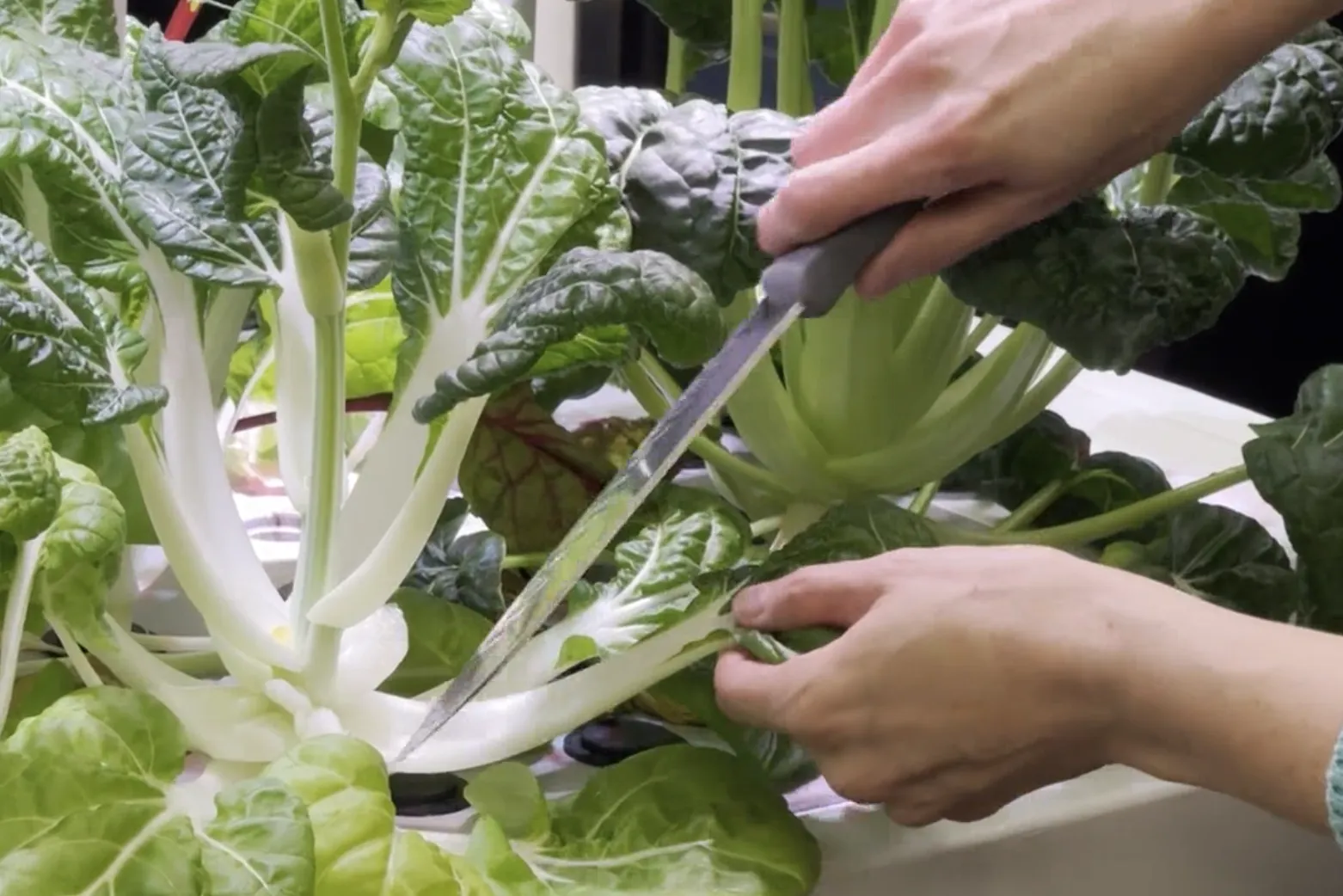
Harvesting bok choy from a hydroponic unit
VIDEO: Watch as Amber Bosket harvests produce from an urban farm and prepares a stir-fry dish out of it.
Urban farming is a very practical solution for getting local, fresh, and seasonal produce to make a nutritious meal from ingredients sourced from within the city. In the video above, Amber Bosket, COO of Energy Tree, demonstrates the process of harvesting, preparing, and cooking a stir-fry dish at the North Las Vegas Urban Center for Advanced Agricultural Technologies. The dish uses fresh vegetables grown in both a greenhouse that’s just a short walk from the kitchen and a hydroponic unit that was placed inside of the kitchen itself. Growing food indoors is a form of distributed farming that brings more food resources closer to you, and sometimes just inches from where you are going to prepare them for a meal.
Vertical growing with hydroponic technologies is a great way to save water and floor space. Modern LED lighting technologies keep their power usage low and provide the light spectrums plants need to grow, while the ability to have a garden plot attached to a wall inside of any building gives urban dwellers the opportunity to truly connect with the food they eat. With so many benefits, this type of farming could become common place in homes and even restaurants in the future.
In urban environments, having a dedicated external structure for growing produce can also provide great benefits. Structures such as greenhouses allow food to be grown outdoors for much longer periods of time compared to being planted just anywhere because the crops inside the greenhouse can be protected from weather extremes. During the winter, greenhouses hold in warm air temperatures, while during the summer, shading limits direct sunlight and lowers surface temperatures, all while maintaining humidity levels for the crops and optimizing their growing environment all year-round.
Energy Tree hosting a farmer's market stand where fresh, ripe produce was given away for free to the community.
Farm stands like this one at the Energy Tree Research and Production Farm expose communities to the prospect of growing fresh supplemental food sources anywhere in or around their homes. Urban populations need to increase nutrition levels in order to decrease the chronic diseases associated with the unhealthy diets common in America. Improving fresh food access around urban communities is a requirement if nutritional goals for our city residents are ever going to be seriously addressed.