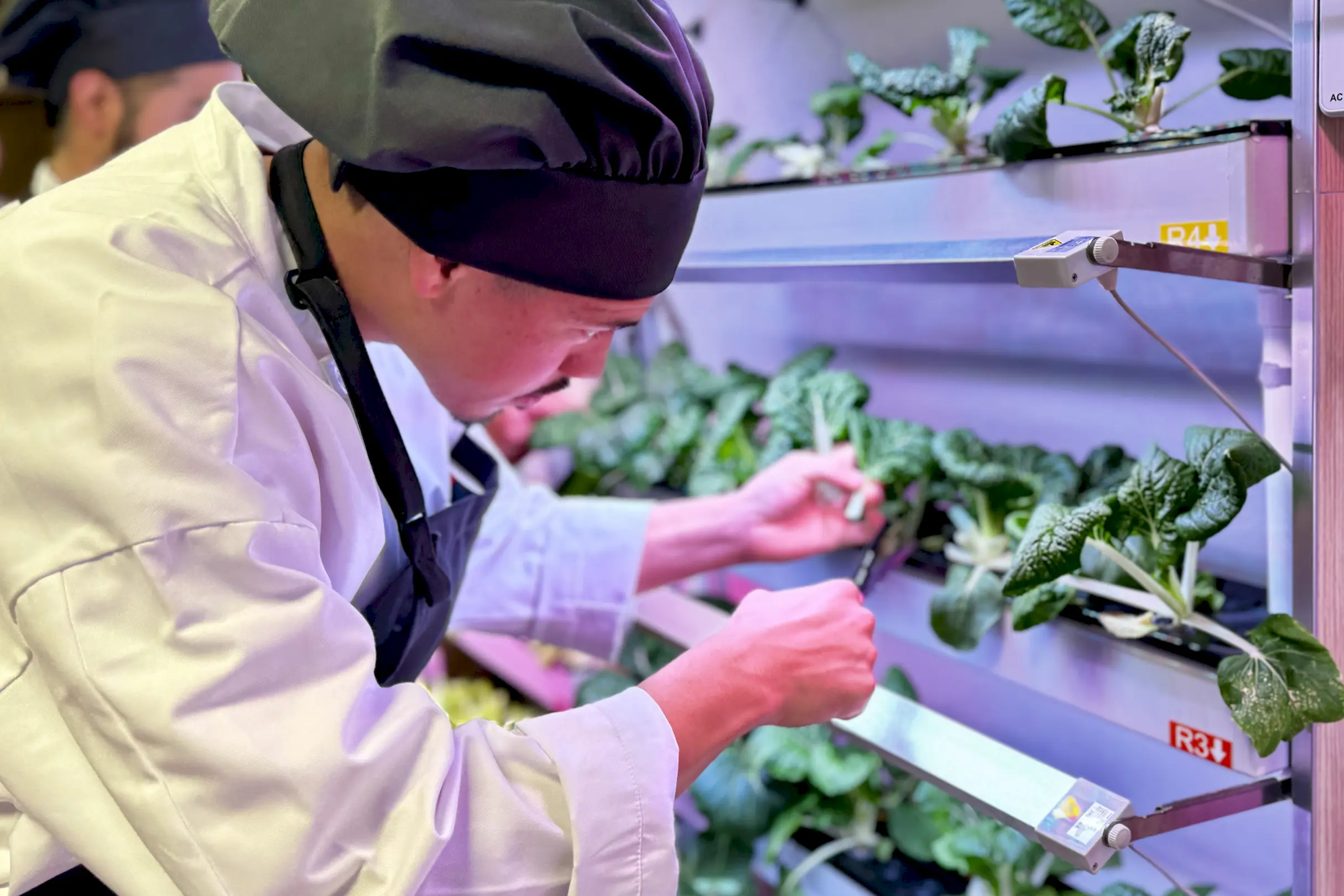

In an effort to strengthen the local food system in Southern Nevada, an indoor agriculture pilot program for culinary training was conducted at the North Las Vegas Urban Center for Advanced Agricultural Technologies. The program was done in conjunction with the Culinary Academy of Las Vegas and Growing Gears to expand the traditional skills required in the culinary workforce to include plant observation and harvesting techniques. The overall goal was to explore creative approaches to increasing supply chain resilience, incorporating on site food production, and enhancing the principles of the farm-to-table experience.

Advanced hydroponic technologies were incorporated into the program to provide students with a real world environment where the restaurants of the future will also include an indoor food growing room along side a walk-in refrigerator. The expansion of the culinary arts has now entered a junction where thriving lettuce and basil are just seconds away from the dishes they are going to be incorporated into. Hydroponically grown produce also saves on water resources as it uses 90 percent less water than traditional farming. This makes hydroponic farming a good solution for cities that are looking to conserve more of their water resources while increasing their supplies of local produce.

Culinary Academy chefs learned about new advancements in hydroponic technologies, various plant nutrient mixtures, LED lighting configurations, and how these factors effect plant health and flavor profiles. The collaboration between the special expertise of the chefs and the hydroponic industry specialists created a unique environment where discussions were blended between both food and plant sciences. When looking into culinary innovations, the chefs ultimately have the passion and the skills to turn something that you should eat into something that you want to eat.

